
Ah, the nicer problems of scaling a coaching business. Your clients are referring friends, your schedule is filling up, and you’ve built something that pays the bills and keeps growing. Now you’re wondering where to take it next.
There’s a fork in the road: buy into a personal training franchise, with an established brand and a playbook to follow, or keep growing as an independent personal trainer, building your own team and systems under your own name.
Having support sounds good, especially when you’ve been figuring everything out yourself. But you’ve also built a reputation, client relationships, and a way of coaching that people come back for. How much of that would you want to change?
Before you buy a personal training franchise, it’s worth understanding what you’d gain, what you’d pay, and which decisions would still be yours. Let’s work through both options so you can choose what fits the business you want to run.
What a Personal Training Franchise Actually Costs (and What You Get for It)
When you’re comparing PT franchise opportunities, separate the price of joining the brand from the money needed to open and run the business.
What You Pay Upfront
The International Franchise Association puts a typical franchise fee at $20,000–$50,000 across industries. That buys access to the brand and business model.
⚠️For fitness brands specifically, a 2026 review of 28 franchise disclosure documents put the average initial fee at $48,485, near the top of the IFA’s range!
Your total investment also covers premises, equipment, setup, and working capital—the cash that pays the bills while you build sales.
For context, 1851 Franchise’s roundup lists these U.S. investment ranges for 2026:
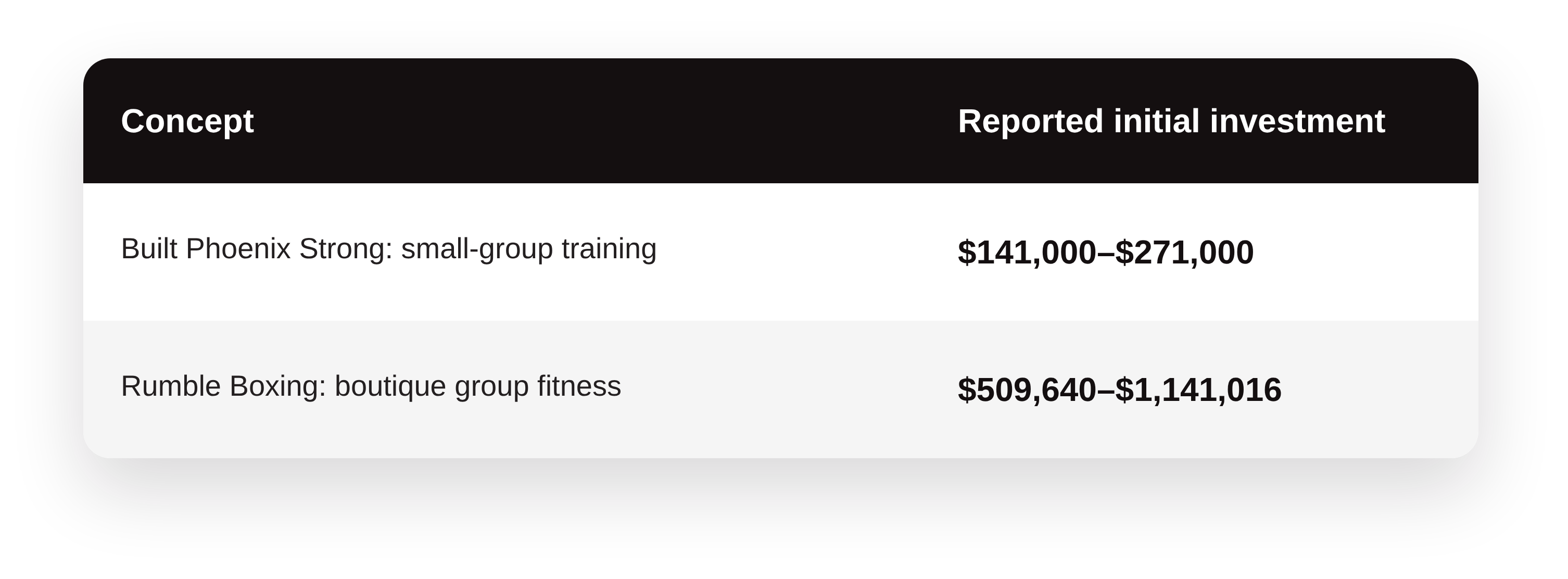
You should check the current franchise disclosure document for the specific opportunity and what its estimate includes.
What You Keep Paying
The IFA cites typical royalties of 5–9% of gross sales across industries, with many franchises also charging marketing-fund contributions. Fitness brands tend to run lower, mostly 5–8%, per recent FDD filings.
Your franchise royalty comes out every month, along with payroll, rent, and the other costs of running a studio. You’ll also likely spend on local marketing beyond what the franchise covers. That’s what determines how much of your revenue you actually keep.
What You Get in Return
You’re buying a head start: brand recognition, an operating playbook, staff training, and ongoing support. Depending on the agreement, that can include site-selection help, marketing assistance, and territory rights. The FTC’s franchise guide explains what to check.
The financial opportunity can be substantial. Discover Strength, for example, reports average annual studio revenue of $872K, but it’s specifically for studios open 24+ months. Keep in mind these are brand-reported sales, not profit or an ROI percentage.
The work can be fulfilling, too. In Franchise Business Review’s 2026 owner research, 82% of more than 26,000 surveyed owners enjoyed operating their business. That covers participating franchises across industries. In fitness, you also get the opportunity to develop coaches and help more people build healthier lives.
The question is which advantages you still need. If you’ve built a reputation but need help opening and managing a studio, that support could be valuable. If your team and processes already work, look for what the franchise would add.
Franchise vs. Independent Business Trade-Offs: Brand, Support vs. Control & Margin
A personal training franchise gives you a system to grow within. The questions you should be able to answer before signing it, are:
- Whether its support and earning potential justify the ongoing fees?
- Whether you’re comfortable following someone else’s rules.
What Royalties Look Like Over Five Years
Imagine your studio generates $500,000 in annual revenue, holding steady for five years. Here’s what different royalty rates would cost:
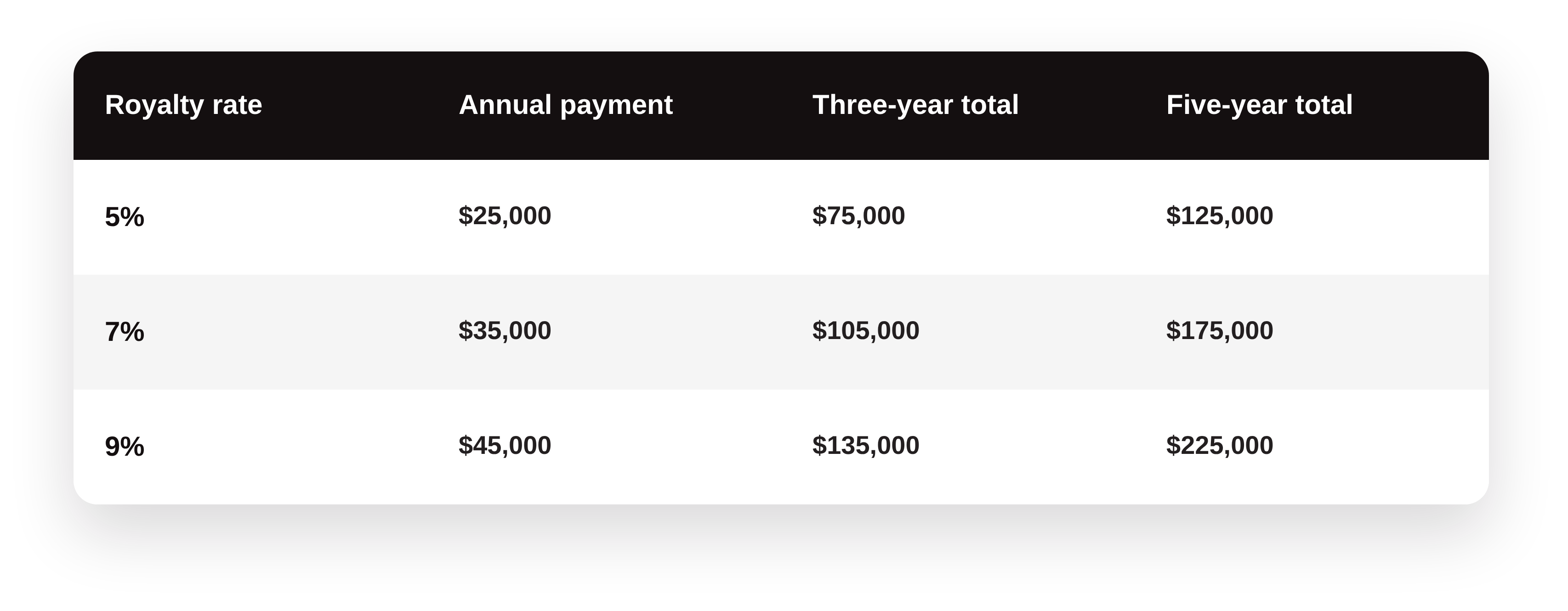
This hypothetical example excludes the joining fee, marketing contributions, and other expenses. As revenue grows, a percentage-based franchise royalty grows with it.
By comparison, an illustrative software subscription of $200 a month would cost $12,000 over five years if the price stayed unchanged. But software covers only part of what a franchise provides. An independent business still needs marketing, staff development, and operational support.
The useful comparison is what each route costs and helps you earn, rather than treating every royalty dollar as lost profit.
Which Decisions Stay Yours?
The operating playbook can save you plenty of trial and error. It also sets boundaries.
Your agreement may specify approved suppliers and software, services you can sell, branding requirements, and where you can operate. System-wide campaigns may also differ from what you’d choose locally.
If you’re excited about growing your business through online coaching, new packages, or your own training method, check how much flexibility the agreement allows, as well.
Consider Who Else Is in the Market
FRANdata’s 2026 franchise outlook, produced for the IFA, reports that 19.3% of franchisees control 58.8% of locations across franchising. That’s a multi-unit franchise landscape, with a small share of owners running most of the locations you’d be competing with. Not everyone is comfortable in such a competitive environment.
Ask how the franchise helps a new single-location owner compete. Its business systems and support should have practical value at your stage, too.
Why More Independent Trainers Are Choosing Software Over a Franchise
If steady referrals and a growing client list have brought you to this decision, give yourself some credit. You’ve already built something people value. Your reputation, relationships, and coaching approach are assets you can keep developing under your own name.
Before you buy a personal training franchise, consider what would happen if you invested in making your own business easier to grow.
Give Your Coaching a System Your Team Can Follow
Alloy Franchise Fitness shows what’s possible when tech gets out of the way. They wanted their trainers coaching up to 6 clients at a time without losing that personal touch. So they brought in ABC Trainerize to connect coaches and clients and keep the experience consistent across all their locations.
Here’s what Rick Mayo, Alloy’s founder, said about the shift:
[quote style] “As soon as we implemented the Trainerize app within our clubs, it allowed all of our coaches to communicate with all of our clients and all of our other trainers, which means we were providing a consistent customer experience—which is very difficult to do at scale and at volume, but we have been able to do that, and Trainerize has been a perfect tool for that.” – Alloy owner Rick Mayo
That same setup works for you as an independent trainer. With ABC Trainerize, you can run your onboarding, build reusable programs, track progress, and keep your clients and your team talking on one platform. It means any coach on your roster delivers the same standard your clients expect, whether you’re coaching 20 clients or 200.
Keep Improving the Experience Under Your Own Brand
Your clients’ feedback can shape what happens next. You can introduce a hybrid package, specialize in a new audience, change your onboarding, or develop your own training method. Those decisions stay with you.
As you document what works and teach it to your team, your business becomes less dependent on you personally delivering every session. Our coaching growth guide shows how to build that repeatable process.
You’re also building recognition for your own name. Each successful client relationship and referral contributes to the business you own.
Choose the Support You Still Need
A franchise can bring an established reputation, an operating playbook, and experienced people to guide you. Those advantages matter.
But if you already have demand and a service clients recommend, staying independent gives you a strong starting point too. You can choose software, education, and specialist support around the gaps in your business while keeping the freedom to shape its future.
How to Decide Between a Personal Training Franchise and Staying Independent
Let’s put both options on paper. These three questions will help you compare the numbers, the support, and the freedom you’d have.
1. What Would Each Option Cost Over 3-5 Years?
For the franchise, add up:
- The initial franchise fee and opening costs
- Working capital to cover bills while you build sales
- Royalties based on your projected revenue
- Marketing-fund contributions and any local advertising
For your independent business, add up:
- Setup or expansion costs
- Software subscriptions
- Your own marketing budget
- Training, consultants, or other support you’d need
- Working capital to keep the business running as you grow
Include premises, equipment, staffing, and other operating expenses in both budgets where relevant. Then estimate what you could realistically earn after those costs.
2. Do You Need the Franchise’s Reputation, or Do You Already Have Your Own?
Brand recognition matters when it helps bring clients through your door. Ask yourself:
- Do people in your target market know and trust this franchise?
- Would its name help you attract clients you struggle to reach?
- Are clients already seeking you out and referring friends?
If your reputation is already generating demand, count that as something valuable you’ve built.
3. Which Decisions Do You Want to Keep?
Make a short list of what matters to you:
- Your coaching methods and services.
- Your packages and branding.
- Your choice of software and suppliers.
- Your plans for online coaching or new locations.
Check that list against the franchise agreement.
| VERDICT: Investing in a fitness franchise for trainers tends to make more sense when you’re starting from zero in an unfamiliar market and want a proven playbook, training, and support.
Staying independent tends to make more sense when you’ve already proven your model and mainly need to scale it. If clients get results and recommend you, your next step may be investing in the tools, team, and processes that help you deliver more of what already works. |
FAQs About Personal Training Franchises
1. How much does it really cost to buy a personal training franchise?
The total cost includes the joining fee, premises, equipment, setup, and working capital. The IFA cites typical initial fees of $20,000–$50,000 across industries, but that is only part of the budget. Fitness-specific FDD data puts the average closer to $48,485. We encourage you to check the brand’s current disclosure document for its full investment estimate.
2. Do I keep less profit with a franchise than running my own training business?
Franchise fees reduce the profit you keep from a given level of sales, but the brand’s support may help you generate more revenue or operate more efficiently. Your actual take-home profit depends on sales and all operating costs under each model.
3. What do I actually get from a franchise that I couldn’t build myself?
A franchise gives you access to an existing brand, operating methods, training, and agreed support. You can develop many of those capabilities independently, but doing so takes time and resources. The value lies in how much useful groundwork the franchise has already done.
4. How much of my revenue goes toward franchise royalties?
Fitness franchises specifically tend to cluster at 5–8%, per 2026 FDD filings. Your agreement sets the actual rate, and marketing contributions or other charges may apply separately.
5. Can software replace what a personal training franchise gives you?
Personal training software can support programming, client management, progress tracking, and communication. It cannot supply an established reputation or a complete business model. Its value is helping you organize and deliver the service you build.
Build the Training Business You Want to Own
You’ve already proven you can coach, build client relationships, and keep people coming back. That’s the hard part. Now it’s about choosing where you do that next, with a brand backing you up, or on your own terms.
Franchises can work if you want the shortcut and don’t mind following their playbook. But if your clients are already referring friends and your reputation is doing the selling, staying independent isn’t the risky move, it’s the one that lets you keep what you’ve built.
Either way, you don’t have to figure it out alone. ABC Trainerize is built for trainers who want to scale without losing the personal touch that got them here in the first place. Whether you’re managing your first hire or running a multi-coach practice, it handles the logistics so you can focus on coaching.
The best business for you is the one you actually want to run. Pick that, and we’ll help you build it. Start for Free and explore how it fits the business you’re building.