

Planilhas são uma das ferramentas de gestão mais utilizadas por personal trainers na área de fitness, e por um bom motivo. Mas elas têm limitações reais, e a maioria dos treinadores as atinge mais cedo do que o esperado. Quando você percebe que está perdendo tempo, prejudicando sua reputação com os clientes e que existe uma maneira melhor de lidar com tudo isso, já passou da hora de mudar.
Para treinadores que levam a sério a expansão de seus negócios de treinamento pessoal, as ferramentas iniciais raramente se mostram adequadas à medida que sua lista de clientes cresce.
Se você está procurando uma alternativa sólida às planilhas de treinamento pessoal, este artigo ajudará você a identificar o ponto de inflexão e mostrará exatamente o que muda quando você migra para um software dedicado ao treinamento pessoal. Cada seção abaixo descreve algo que você provavelmente faz manualmente agora e como isso se torna quando o software assume o controle.
Quando o treinamento físico com o Google Sheets atinge seus limites
Vamos deixar claro onde as planilhas para treinamento pessoal realmente se mostram úteis:
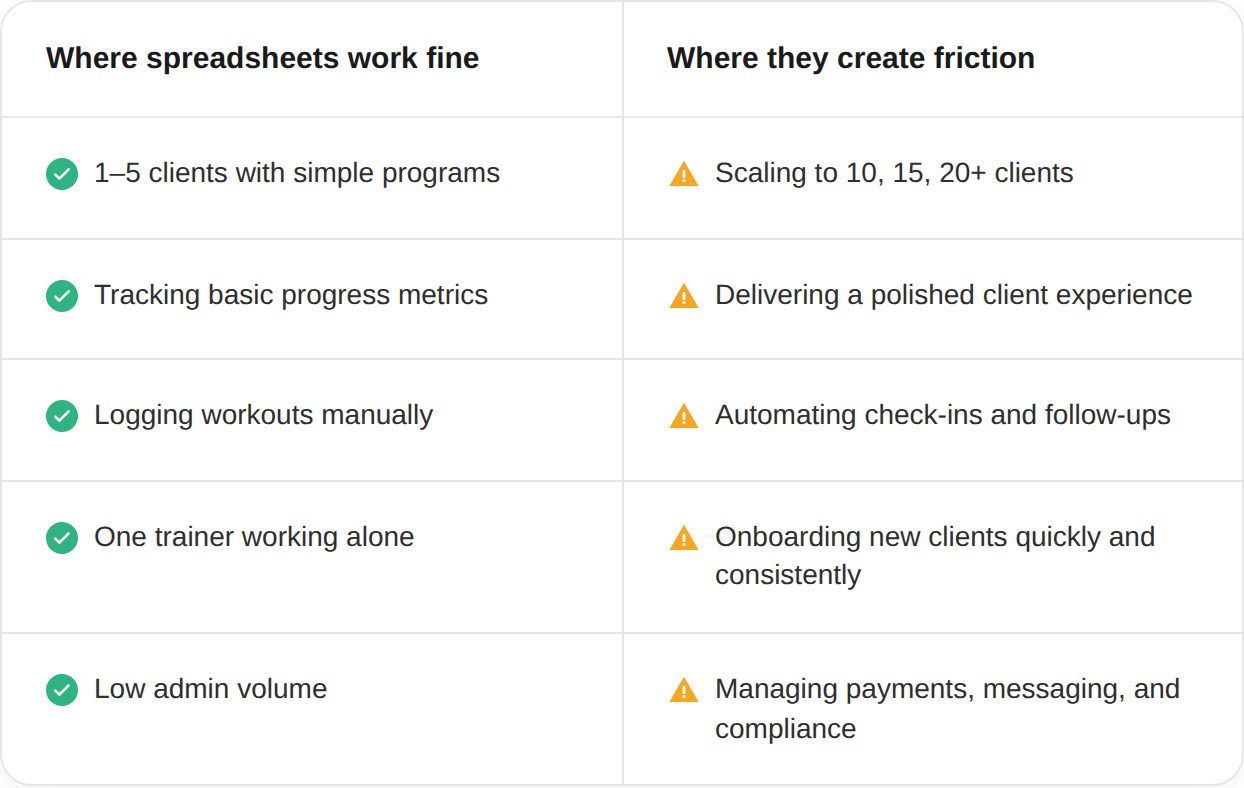
O atrito geralmente não é visível de imediato. Ele se acumula silenciosamente na forma de um texto extra aqui, uma fatura manual ali, um check-in que você esqueceu porque não foi acionado automaticamente.
Quando você se der conta de que seu sistema de planilhas está te atrasando, já estará gastando duas ou três horas por semana em tarefas administrativas que um software de gerenciamento de programas de clientes faria em segundo plano.
A questão não é se as planilhas podem tecnicamente armazenar os dados dos seus clientes. Elas podem. A questão é quanto custa, por cliente, por semana, administrar seu negócio dessa forma.
👉 Baixe o Guia Rápido de Ferramentas de Software para Personal Trainers Gratuito
7 maneiras pelas quais o software de treinamento pessoal funciona de forma diferente
Com o software de treinamento pessoal adequado , as planilhas ainda podem desempenhar um papel de apoio, por algum tempo.
Mas cada ponto abaixo corresponde a algo que você está fazendo manualmente e que o software faz automaticamente, e a diferença aumenta quanto mais você espera.
1. Desenvolvimento de programas: modelos e bibliotecas versus recriar cada planilha do zero
Quando um novo cliente se inscreve, quanto tempo leva para você criar o programa para ele?
Se o seu sistema estiver no Google Sheets ou no Excel, a solução provavelmente envolve copiar a planilha de um cliente anterior, renomear os itens, ajustar séries e repetições, reformatar as células e torcer para que nenhuma fórmula seja afetada.
O software de treinamento pessoal oferece uma biblioteca de exercícios com demonstrações em vídeo já integradas, ferramentas de criação de treinos com recurso “arrastar e soltar” e modelos de programas reutilizáveis que você cria uma vez e atribui em segundos. Um programa que leva 45 minutos para ser recriado em uma planilha pode ser feito em menos de cinco minutos no software, depois que seus modelos estiverem configurados.
Essa diferença de tempo é por cliente, por ciclo de programa. Com dez clientes atualizando seus programas mensalmente, isso representa horas recuperadas todos os meses, sem precisar usar nenhuma fórmula.
Adicione a isso um Criador de Treinos com IA que gera programas totalmente personalizados com base nos objetivos, treinos anteriores e preferências de cada cliente. Nesse ponto, você não está apenas economizando tempo — está oferecendo um programa melhor do que qualquer planilha criada manualmente poderia produzir.
👉 Leia mais: Software de criação de treinos para personal trainers
2. Os clientes recebem um aplicativo de verdade, não um link para um PDF que eles vão perder.
Este é o fator que mais afeta a retenção de clientes. Quando você envia o programa para um cliente por meio de um link de planilha ou um PDF, você está pedindo que ele gerencie a própria experiência.
Eles precisam se lembrar onde o arquivo está, descobrir como registrar seus resultados e voltar com perguntas que um bom aplicativo responderia automaticamente.
Uma alternativa de planilha para personal trainers, criada para atender clientes, permite que seus clientes abram um aplicativo com seus nomes, visualizem seu programa com vídeos de exercícios e registrem seus treinos diretamente na plataforma.
Os lembretes de acompanhamento chegam por meio de notificações push. As fotos de progresso ficam armazenadas em um só lugar. O treinador, você, pode ver tudo em tempo real.
A diferença de experiência entre “aqui está sua planilha do Google” e “aqui está seu aplicativo” é visível para os clientes desde o primeiro dia e afeta diretamente o tempo de permanência e a probabilidade de indicarem o serviço a outras pessoas.
👉 Leia mais: Os melhores aplicativos de personal trainer para expandir seu negócio de treinamento pessoal
3. Os check-ins acontecem automaticamente, sem mais mensagens de acompanhamento manuais.
Os acompanhamentos manuais são um dos maiores desperdícios de tempo em qualquer negócio de coaching. Se o seu sistema de acompanhamento de clientes se resume a um lembrete recorrente no celular para enviar mensagens individuais, você já sabe o quão inconsistente isso se torna à medida que sua carteira de clientes cresce.
Expandir um negócio de personal trainer com check-ins automatizados significa configurar um lembrete uma única vez, por exemplo, no terceiro dia de um novo programa, todo domingo à noite, após um treino perdido, e enviá-lo automaticamente para todos os clientes aos quais se aplica.
Para os treinadores, isso significa pontos de contato consistentes sem esforço manual constante, o que é uma das maiores vantagens práticas das planilhas em comparação com softwares de treinamento em larga escala.
👉 Leia mais: Aplicativos para negócios de personal trainer: as melhores opções para crescer, treinar e expandir
4. O progresso é apresentado em um único painel, e não espalhado por quinze abas.
Pergunte-se quanto tempo você levaria agora para reunir seis meses de dados de progresso de qualquer um de seus clientes. Fotos, medidas, registros de treino, taxas de adesão, acompanhamento nutricional.
Se esses dados estiverem espalhados por uma planilha, o rolo da câmera de um celular e uma sequência de mensagens de texto, a resposta honesta provavelmente é “mais tempo do que deveria”.
Uma plataforma dedicada à gestão do programa do cliente mantém tudo em um só lugar: métricas corporais, histórico de treinos, fotos de progresso, acompanhamento de hábitos e anotações do treinador.
Você pode acessá-lo em segundos, compartilhá-lo com o cliente em uma chamada de revisão e usá-lo para tomar decisões de programação com base em padrões reais, em vez de memorização.
É também nessa camada que os clientes se sentem mais apoiados. Ver seus próprios dados organizados e visíveis muda a forma como eles percebem o valor do seu coaching, porque demonstra que você está prestando atenção.
👉 Leia mais: Rastreador de Progresso do Cliente: Ferramenta Essencial para Personal Trainers
5. Os pagamentos não exigem cobrança.
Se você ainda emite faturas manualmente para seus clientes ou envia lembretes de pagamento, está realizando um trabalho que o software eliminou há anos .
A cobrança recorrente significa que o cartão do cliente é debitado automaticamente na data de vencimento, a cada ciclo, sem que você precise enviar um lembrete ou um link de pagamento por mensagem de texto.
A diferença entre a emissão de faturas manuais e a cobrança recorrente automatizada não se resume apenas ao tempo, mas também à receita. Pagamentos atrasados, renovações esquecidas e conversas constrangedoras sobre pagamentos são pontos de atrito que reduzem a retenção de clientes. Quando o pagamento é automático e descomplicado, ele permanece invisível, que é exatamente onde deveria estar.
Um software de treinamento pessoal com pagamentos integrados permite que os clientes comprem pacotes diretamente da sua loja virtual, atualizem seus planos ou adquiram serviços adicionais sem que você precise intervir na transação. Isso cria um funil de vendas que funciona enquanto você está treinando, algo que nenhuma planilha consegue replicar.
👉 Leia mais: Soluções de pagamento online: as melhores de 2026
6. A comunicação não vaza para suas mensagens diretas.
A maioria dos coaches acaba usando pelo menos dois canais de mensagens simultaneamente, e isso às vezes é inevitável. WhatsApp, mensagens diretas do Instagram e SMS são os canais onde os clientes se comunicam informalmente, e tudo bem. Mas a comunicação importante do coaching deve ser feita em outro lugar.
Quando os check-ins, as perguntas do formulário e as anotações do programa ficam espalhados por três ou quatro canais, informações importantes acabam se perdendo. O sistema de mensagens integrado ao aplicativo mantém todas as conversas com o cliente vinculadas ao seu perfil, com todo o histórico visível. Assim, o coaching permanece na plataforma e as interações informais continuam acontecendo onde naturalmente acontecem.
A automação de e-mails cuida da comunicação que, em primeiro lugar, nunca deveria ser manual:
- Sequências de integração que dão as boas-vindas a novos clientes automaticamente.
- Mensagens de marcos que são acionadas quando o progresso é atingido.
- Incentivos para reengajar clientes que se tornaram inativos
- Os avisos de upsell são exibidos quando alguém está pronto para a próxima fase.
Cada interação com o usuário ocorre em segundo plano, portanto, as mensagens que você realmente escreve são as que valem a pena escrever.
👉 Leia mais: Guia Definitivo para Treinamento Pessoal Online: Coaching, Pacotes e Dicas para o Sucesso
7. Adicionar um novo cliente não aumenta proporcionalmente o volume de trabalho.
É este fator que define se você realmente consegue escalar. Em um sistema de planilha, cada novo cliente gera trabalho aproximadamente proporcional: uma nova aba, uma nova configuração de pagamento, um novo cronograma de check-in, uma nova pasta para as fotos. Cada um deles consome quase o mesmo tempo administrativo que o primeiro.
Em software, escalar um negócio de personal trainer funciona de forma diferente. Seus modelos já estão prontos. Uma vez que o sistema esteja configurado, cada novo cliente custa uma fração do tempo que os anteriores custavam, porque as partes repetíveis se automatizam.
Isso não é apenas uma economia de tempo. É uma mudança na forma como você gasta suas horas de trabalho. Menos administração, menos cobranças, menos reconstruções do zero e mais tempo para treinamento, marketing e crescimento da sua receita. Você ainda precisa manter o sistema organizado e atualizado, mas isso é um trabalho leve comparado ao que as planilhas exigem.
👉 Leia mais: 9 das melhores plataformas de personal trainer remoto para 2026
Quando é que a mudança realmente faz sentido?
Existe um limite prático que a maioria dos treinadores atinge: mais de 10 clientes e mais de duas horas semanais dedicadas à administração . Nesse ponto, o custo do software (normalmente de US$ 30 a US$ 60 por mês para uma plataforma como o ABC Trainerize) é amplamente compensado pelo tempo economizado.
Faça as contas você mesmo:
- Com 10 clientes, se o software lhe poupar 90 minutos de trabalho administrativo por semana, isso representa 6 horas por mês.
- Com um valor de coaching de US$ 75 por hora, isso representa uma recuperação de US$ 450 por mês em tarefas que você nunca deveria estar fazendo manualmente.
- Com 20 clientes, essa diferença aumenta consideravelmente.
A questão não é se as planilhas “funcionam”. Trata-se de quanto vale o seu tempo e se o seu sistema cresce com você ou contra você.
Lembre-se: o melhor software de treinamento pessoal não é aquele com mais recursos, mas sim aquele que elimina o máximo de atrito entre você e seus clientes, e entre seus clientes e seus resultados.
👉 Leia mais: Por que você deve usar um software de treinamento pessoal
Perguntas frequentes
O software de treinamento pessoal é melhor do que as planilhas?
Sim, especialmente quando seu negócio começa a crescer ou você oferece treinamentos híbridos ou online. Planilhas são um ponto de partida razoável, mas o software é significativamente mais eficiente em termos de tempo e da experiência que seus clientes têm, e a diferença se torna cada vez mais difícil de ignorar à medida que sua empresa cresce.
Quando devo trocar as planilhas por um software de treinamento pessoal?
O sinal mais claro é quando o trabalho administrativo começa a levar mais de duas horas por semana, ou quando novos clientes exigem o mesmo tempo de configuração que os primeiros. Ambos indicam que seu sistema não está escalando com o seu negócio.
Posso gerenciar mais de 10 clientes com uma planilha?
Tecnicamente, sim. Na prática, gerenciar mais de 10 clientes em uma planilha significa lidar manualmente com acompanhamentos, registro de progresso, pagamentos e comunicação, tarefas que um software automatiza. A maioria dos coaches encontra o ponto ideal entre 8 e 12 clientes.
Quanto tempo um software de treinamento pessoal economiza em comparação com planilhas?
Isso varia de acordo com a complexidade dos seus programas e o número de clientes que você tem. Os coaches geralmente relatam recuperar de 2 a 5 horas de tempo administrativo por semana após a mudança, principalmente em relação à aplicação dos programas, acompanhamento pós-programa e gestão de pagamentos.
Qual a melhor alternativa de planilha para personal trainer?
A ABC Trainerize é a plataforma mais utilizada por treinadores que oferecem treinamento híbrido e online. Ela combina a entrega do programa, a comunicação com o cliente, o acompanhamento do progresso, o coaching de hábitos, a nutrição e os pagamentos em um único aplicativo. Você pode começar gratuitamente para ver como se compara à sua configuração atual.
👉 Leia mais: Os melhores softwares de treinamento pessoal online em 2026
Construa o sistema, depois expanda o negócio.
Planilhas são um bom começo. Isso não é pouca coisa. Mas os coaches que alcançam o sucesso não são aqueles que trabalham mais dentro de um sistema falho, e sim aqueles que o substituem antes que o custo seja maior do que imaginam.
Cada tática, modelo e automação presente em um software de treinamento pessoal representa tempo recuperado. Tempo que você dedica a orientar, divulgar e construir algo que não dependa da sua intervenção manual.
O sistema faz o trabalho pesado. Você faz o trabalho que realmente importa.
Comece seu teste gratuito do ABC Trainerize e veja como será sua semana com a administração automatizada.