

Typically, referrals have been one of the most dependable ways for small businesses to grow. Personal training is no exception: when a client recommends you, their friend arrives with a layer of trust that paid ads have to work much harder to earn.
And the value goes beyond the first sale. ABC Trainerize data shows referrals convert 40% higher than other acquisition channels, while referred clients have roughly 30% higher lifetime value. That’s because they are more likely to arrive connected, engaged, and ready to commit.
The good news is that you do not need a large marketing budget or an awkward sales pitch to make referrals a reliable source of new clients. With the right system, sharing can feel seamless for your clients, rewarding for their friends, and profitable for your business.
Below, we’ll show you how to build a best-in-class personal trainer referral program that does exactly that.
TL;DR
A referral program for personal trainers works when it is easy to share, worthwhile for both people, timed around a genuine client win, and tracked from the first click to sign-up.
Your goal is not to ask clients for favors. It is to make it easy for happy clients to connect a friend with coaching they may genuinely benefit from.
What Is a Personal Trainer Referral Program? (And Why You Need One)
A personal trainer referral program is a repeatable system that rewards an existing client for introducing someone new to your coaching business. The system has four parts:
- A client has a positive experience or reaches a meaningful milestone.
- You give them a simple way to share your offer with a friend.
- The friend receives a clear, relevant incentive to take the next step.
- You track the introduction and reward the referring client when the new person qualifies.
The keyword here is “system.” Referrals can happen organically, but organic does not mean predictable. If the process relies on a client remembering what to say, finding an old link, and explaining your offer from scratch, it is asking them to do too much work.
A referral program turns informal word-of-mouth into a process you can repeat, track, and improve. That predictability is what makes it a reliable growth channel rather than an occasional source of new clients.
Check Out: 4 Ways to Start a Client Referral and Rewards Program to Bring in More Business
Why Most Referral Programs Never Pay Off
Your clients may love your coaching. But if referring a friend feels like work, they will not do it consistently.
Across our personal training as well as gym and fitness clubs network, we’ve seen these four common mistakes that stop a referral program from working:
#1. Too many steps: Clients should not have to find your website, explain your offer, or remember a code. Give them a shareable link, a short message, and one clear next step.
#2. A vague or weak reward: “Refer a friend for a special reward” is not enough. Be specific: for example, account credit for the client and a free consultation or discounted first month for their friend.
#3. The offer is easy to miss: One launch email will not cut it. Mention referrals after milestones, programme completions, and progress wins—when clients already feel good about their results.
#4. Slow recognition: Thank clients quickly and send their reward when the agreed action happens. Tracking who referred each new prospect helps you recognise your best advocates without relying on memory.
Read More: TRAINERIZE UPDATE | Boost Growth and Engagement: Track Referrals and Promote Like a Pro
Why Personal Training Referral Programs Beat Paid Acquisition
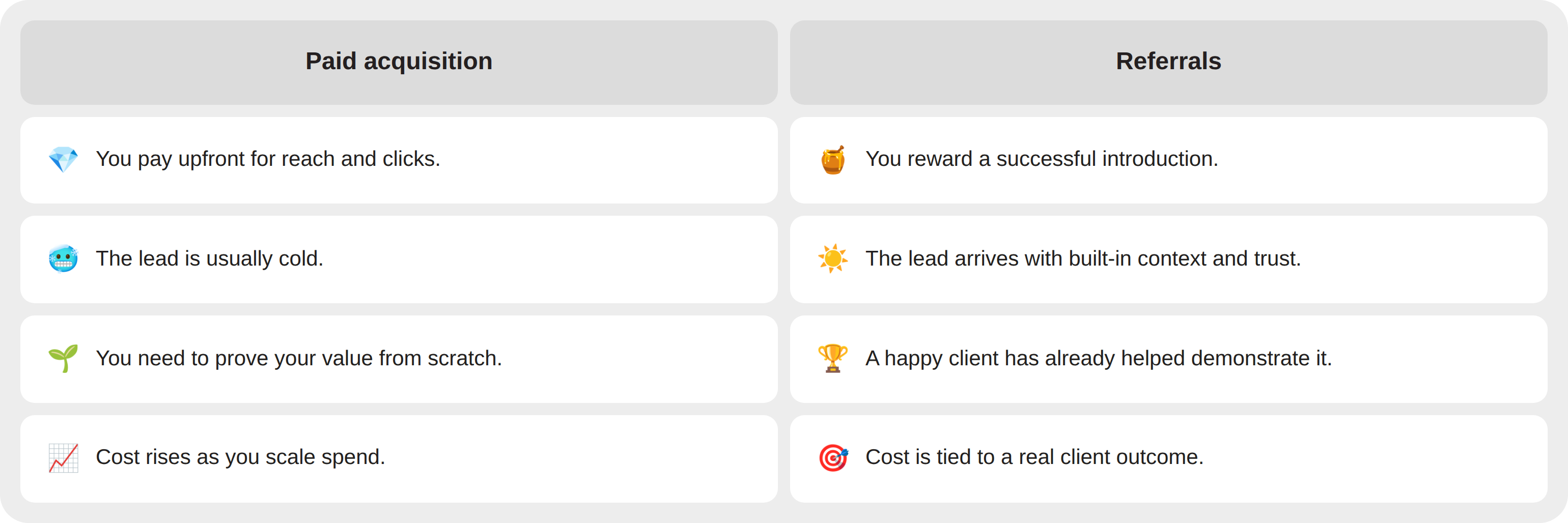
Paid ads can be useful. They can put your coaching in front of new people, help you test an offer, and build visibility when your business is still growing.
But paid ads start with a disadvantage: you are paying to earn attention from people who do not know you yet.
You pay before you know whether someone will click, book a consultation, show up, or become a long-term client. And your real acquisition cost is more than ad spend. It includes the time spent creating ads, following up with leads, and converting interest into a sale.
A referral starts somewhere different: trust. The prospect has already heard about your coaching from someone whose opinion they value. They may still need to decide whether your price, availability, and approach are right for them, but they are not starting from zero.
What’s more: ABC Trainerize’s data shows that referred members typically spend 16% more over their lifetime, which means more revenue per client, all while it costs you much less to get them.
Check out: Personal Trainer Marketing: How to Get Found, Build Trust, and Convert Clients
The High-Converting Referral Program Structure
A good personal trainer referral program should be easy for clients to understand in under 10 seconds:
“Share this with a friend. If they join, you both get a reward.”
Here’s how to build that system.
1. Make Sharing Effortless with One-Tap Sharing
Do not ask clients to find your website, explain your offer, or remember a referral code. Give them a unique referral link and a ready-to-send message they can share by text, email, or social media.
The less they have to think about it, the more likely they are to share.
With ABC Trainerize, clients can share from the Client Referrals banner, and you can see who referred each new prospect.
Try ABC Trainerize to make referrals easier to share, track, and reward, without adding more admin to your week. START TODAY FOR FREE
2. Reward Both People
The best referral incentives help both the client making the introduction and the friend taking the first step.
For example:
- The referring client receives a $20 account credit.
- The new client receives 50% off their first month, a free consultation, or a waived assessment fee.
Be clear about when the reward is earned.
A simple rule is: give the reward once the friend has paid for and started their first coaching package. That way, clients know exactly what needs to happen, and you only reward referrals that become real clients.
3. Keep the Offer Profitable to Protect Your Margins
You do not need to give every referred client the same discount. A reward that works for a premium coaching package may be too generous for a lower-priced plan.
Instead, match the referral offer to the level of coaching the client is referring a friend into.
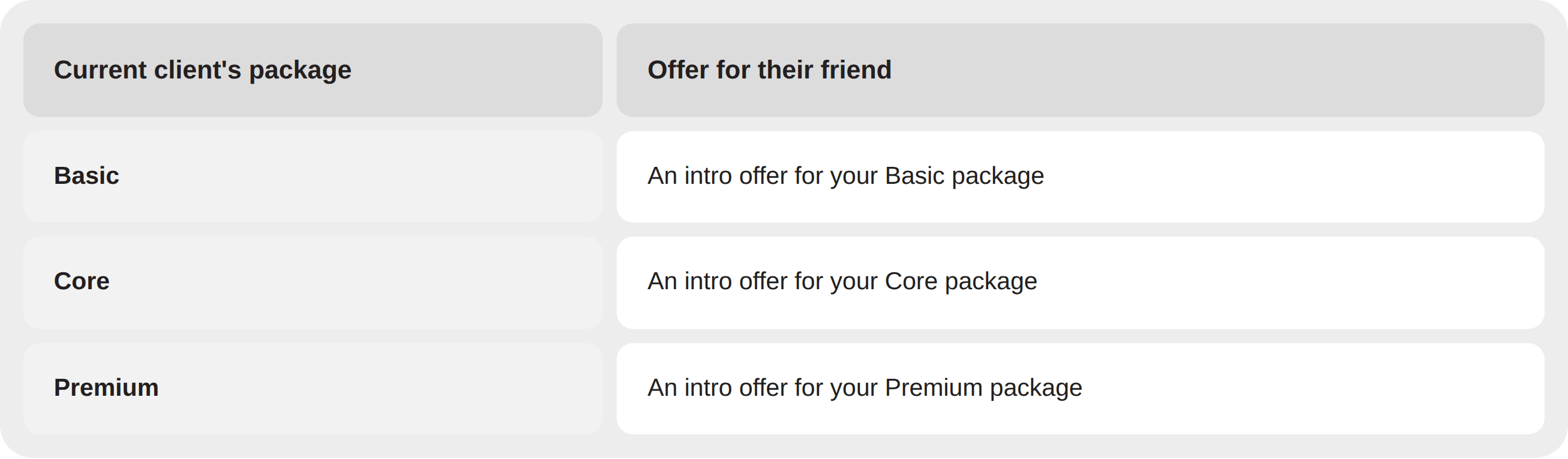
This keeps your offer easy to explain and helps you avoid giving away more than the new client is worth.
4. Gamify It With Milestones: Give Clients a Reason to Keep Referring
A one-time reward can generate one-time activity. Milestones make referrals feel more like a programme clients can take part in.
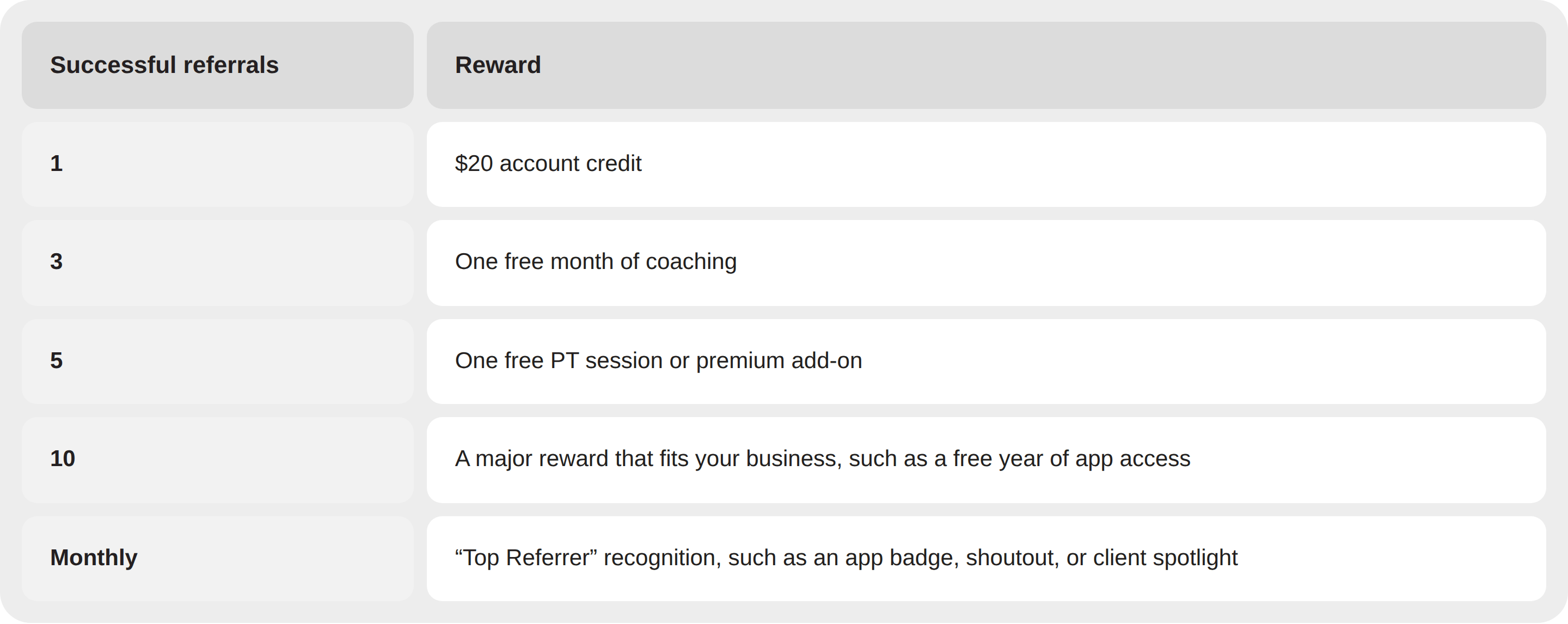
Keep rewards proportional to your pricing. The goal is not to give away revenue. It is to spend part of what you would otherwise pay to acquire a new client through ads.
✏️Note: This framework adapts ABC Fitness’s high-converting referral system, originally developed for multi-location health clubs. The same core principles apply to solo personal trainers.
Referral Scripts for Personal Trainers: Based on 4 Situations
A referral ask should sound like you: direct, genuine, and focused on helping the client’s friend, not pressuring anyone to buy.
The Pre-Written Share Message
I’ve been training with [Your Name], and it’s been a great fit for me. If you’re looking for support with [goal], you can check them out here: [Referral Link]. You’ll get [friend’s offer] if you decide to join.
The In-Session Ask
Use this after a real win: a personal best, a consistency milestone, or a positive progress check-in.
You’ve made serious progress lately. If you have a friend who wants this kind of support, I’d love to help them too. I can send you a link that gives them [offer], and you’ll get [reward] if they join.
The Email or DM Ask
Hey [Client Name], I’m proud of the consistency you’ve built lately. I’ve opened a simple referral offer for clients who know someone who could benefit from coaching. Share this link with anyone who comes to mind: [Referral Link]. If they sign up, they’ll receive [friend’s offer], and you’ll get [reward] as a thank-you.
The Thank-You Follow-Up
Thanks for introducing [Friend’s Name], [Client Name]. I really appreciate the trust. They’ve [booked a consultation / started their first package], so I’ve added your [reward] to your account.
How to Ask for a Personal Training Referral Without Feeling Awkward
The best referral ask is not a random sales request. It follows a moment when the client can clearly see the value of your coaching.
Ask after they hit a goal, finish a programme, or tell you they feel stronger, healthier, or more confident. Then frame the referral as an opportunity for their friend, not a favour for you.
You are not asking clients to sell for you. You are making it easier for them to share something that has helped them.
Pro Tip: Use AI to Draft Your Referral Messages
You do not need to write every referral text, email, or follow-up from a blank page. Use AI to create a first draft, then edit it so it sounds like you and reflects your exact offer.
Try this prompt:
Write three short referral messages for my personal training clients. My niche is [niche], the client receives [reward], and their friend receives [offer]. Keep the tone warm, direct, and not pushy.
For more prompt ideas, see ChatGPT Personal Trainer Prompts
AI helps you draft the message; ABC Trainerize helps you put it into action. Use the platform to share referral links, track who referred each prospect, and keep the process organised as your programme grows.
Your Referral Program Launch Roadmap
You do not need a huge launch. Start simple, learn what works, then build from there.
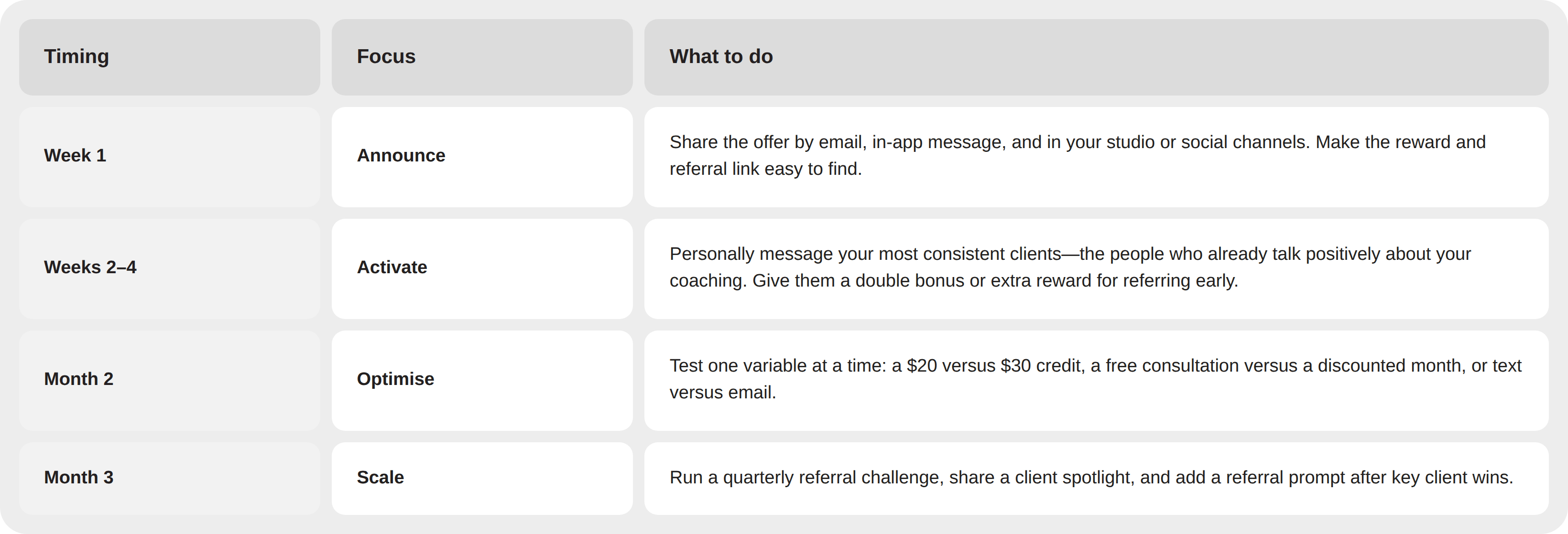
* Adapted from ABC Fitness’s high-converting referral system for health clubs, simplified for solo personal trainers.
Track, Measure, and Benchmark Your Client Referral Program
A referral program is only useful if you know what it is producing. Track these numbers every week:
- Shares: How many clients sent a referral link?
- Clicks: How many friends visited your referral page?
- Conversions: How many became paying clients?
- Retention: Do referred clients stay longer than your other new clients?
- Cost per referral: How much did you spend on rewards for each new client?
Use these as starting benchmarks, but do get your own and try to improve them by 3% each quarter or whenever you run a referral campaign:
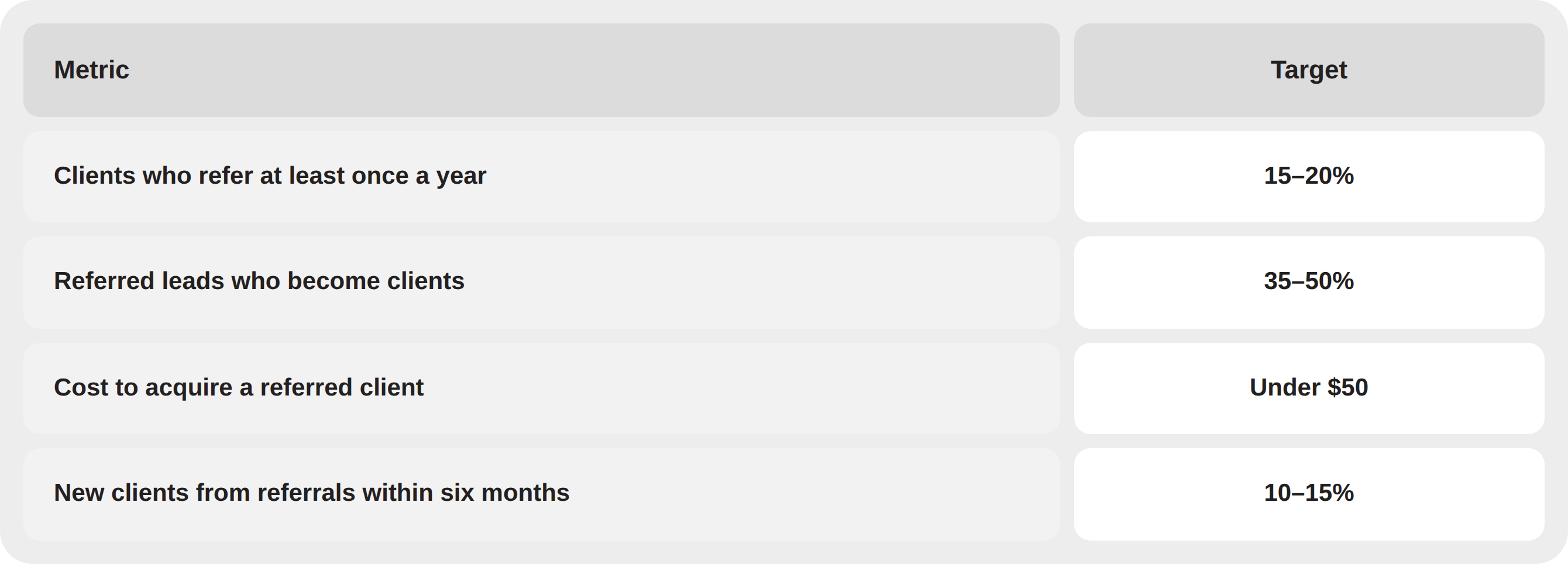
Once this referral system is working, your goal is simple: increase revenue without increasing ad spend. A strong referral channel can lower your acquisition cost and bring in clients who are more likely to stay.
Want more context on where client acquisition is heading? Read the 2026 State of the Personal Training Industry Report: What’s Next?
Automate Your Referral Program with ABC Trainerize
A referral program works best when it does not create more admin.
With ABC Trainerize, clients can share referral links from the app, while you can track the source of each prospect, see who referred them, and recognise your most active advocates. You can also use announcements and push notifications to keep the programme visible after launch.
That means less time updating spreadsheets and chasing referral details—and more time coaching.
4 Common Mistakes to Avoid When Setting Your PT Referral Programs Up
A referral program for personal trainers can lose momentum quickly if you stop talking about it. Avoid these mistakes:
- Going quiet after launch: Keep the programme visible in client check-ins, milestone messages, and monthly updates.
- Forgetting to say thank you: A quick personal message makes clients more likely to refer again.
- Delaying rewards: Deliver the reward as soon as the agreed action happens.
- Promoting before your service is ready: Referrals amplify the client experience you already provide. Make sure your onboarding, communication, and delivery are strong first.
FAQs
1. How to get referrals as a personal trainer?
To get referrals as a personal trainer, make it easy to share, ask after a client win, and give both people a clear reason to act. A link and pre-written message will outperform a vague “tell your friends” request every time.
2. What should I offer as a referral incentive?
The best ones offer something that feels useful but still protects your profit. Client referral incentive ideas include: account credit, a free PT session, a complimentary consultation, or a discounted first month are all good options.
3. When is the best time to ask a client for a referral?
The best time to ask a personal training client for a referral is after a meaningful moment: a personal best, a progress review, a programme completion, or when a client tells you they are feeling better.
4. How do I track referrals without losing track of who sent whom?
Track referrals by using a unique referral link for each client and record the referral source when a prospect books. ABC Trainerize can track this inside your prospect workflow, so you do not have to rely on memory or manual spreadsheets.
Turn Happy Clients Into Your Best Growth Channel
A referral program for personal trainers should not feel awkward, complicated, or expensive. Give clients a simple way to share, reward them clearly, and follow up quickly.
Ready to make referrals part of your growth system? Start your free ABC Trainerize trial today.